You have been told that searing seals in the juices. It does not.
This idea — that a hard sear creates an impermeable crust — was disproved over a hundred years ago. Juices escape from seared meat at the same rate as from unseared meat. The reason you sear is not to trap anything. It is to create something.
That something is the Maillard reaction. And understanding it will change how you think about heat in the kitchen.
What it is
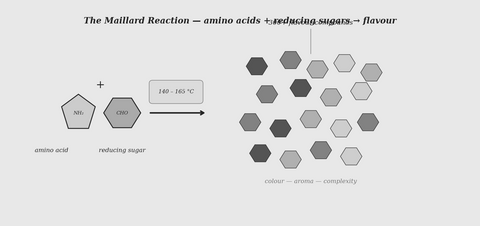
In 1912, a French physician named Louis-Camille Maillard described a chemical reaction between amino acids (the building blocks of protein) and reducing sugars when exposed to heat. Above roughly 140°C, these molecules collide and rearrange into hundreds of new compounds — new flavours, new aromas, new colours — that did not exist in the raw ingredient.
It is why bread crust tastes different from bread crumb. Why roasted coffee is complex and green coffee is not. Why the edge of a chocolate chip cookie is more interesting than the centre. Why the fond at the bottom of a pan after searing is pure concentrated flavour. The same raw materials, transformed entirely by temperature.
The conditions it needs
The Maillard reaction requires three things: protein, sugar, and heat above approximately 140°C. If any of these are absent, it does not happen.
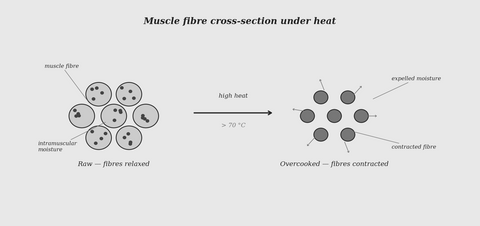
The most common reason it fails in a home kitchen is moisture. Water boils at 100°C. Until all the surface moisture has evaporated, the temperature at the surface of your food cannot exceed 100°C — and 100°C is not enough for Maillard browning. A wet steak, a crowded pan, a pan that was not hot enough: all of these keep the surface below the threshold. The result is steamed protein, not seared protein. Grey, not brown. Flat, not complex.
This is the single most common technical failure in home cooking. And it is entirely preventable.
The practical rules
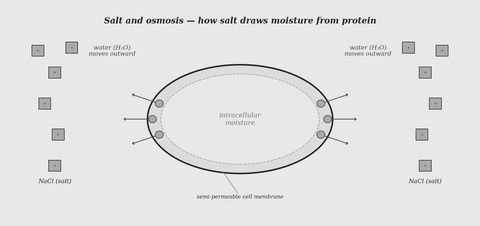
1. Dry the surface. Before any protein goes in the pan, pat it dry with kitchen paper. This is not optional. The moisture on the surface of meat, fish, or chicken must be removed before heat can do its work. If you are dry-brining overnight, the surface will already be dry by morning — an additional benefit.
2. The pan must be genuinely hot. Not warm. Not “pretty hot.” A drop of water should evaporate in under a second when it hits the pan. For a steak or a piece of duck breast, you want the surface temperature of the pan to be above 200°C before the food touches it. Preheat for at least two minutes over high heat.
3. Do not crowd the pan. Every piece of food in the pan releases steam as it cooks. Too many pieces and you have created a steam oven, not a frying pan. The temperature drops, moisture cannot escape, and browning stalls. Cook in batches. Leave space.
4. Do not move it. The crust needs sustained contact with the hot surface to develop. Lifting and shifting the protein breaks the contact before browning can occur. Put it down, leave it alone, and resist the urge to check it. It will release from the pan naturally when the crust has formed.
Where else it matters
Once you understand the Maillard reaction, you see it everywhere:
- Bread: The crust forms above 140°C. The crumb, insulated by moisture, never reaches that temperature. This is why they taste different.
- Pan sauces: The dark residue (fond) left after searing is concentrated Maillard compounds. Deglaze with wine or stock and you dissolve them back into the sauce. This is what gives a good pan sauce its depth.
- Roast vegetables: At 160”180°C in a dry oven, the surface of a carrot or a piece of cauliflower will brown. Cut it into smaller pieces for more surface area. Do not overcrowd the tray.
- Butter: Beurre noisette — browned butter — is the Maillard reaction applied to the milk solids in butter. The result is a nutty, complex, completely different ingredient from the butter you started with.
The most common mistakes
| Mistake | What went wrong | How to prevent it |
|---|---|---|
| Meat looks grey and steamed, not brown | Surface was wet, or pan was not hot enough — surface never reached 140°C | Dry the protein. Heat the pan properly before adding food. |
| Crust burns on the outside while interior is raw | Pan too hot, fat started smoking and breaking down | Use a high smoke-point oil. For thick cuts, sear then finish in the oven. |
| Vegetables steam instead of roasting | Too many pieces in the tray — steam cannot escape | Use a large tray. Spread in a single layer with space between pieces. |